

Mystery shopping can bring in extra money, but most assignments are not highly paid. Current company information shows that many basic shops offer about $5 to $20 in cash, sometimes with a separate purchase reimbursement.
Specialized assignments can pay $100 or more, but those shops usually require more time, experience, travel, or detailed reports. So, mystery shopping is generally better for occasional extra cash and free or reimbursed purchases than dependable full-time income.
Before we begin, sign up free for my work-at-home emails! I send new remote jobs, side gigs, apps that pay, and my free list of 43 non-phone remote jobs.
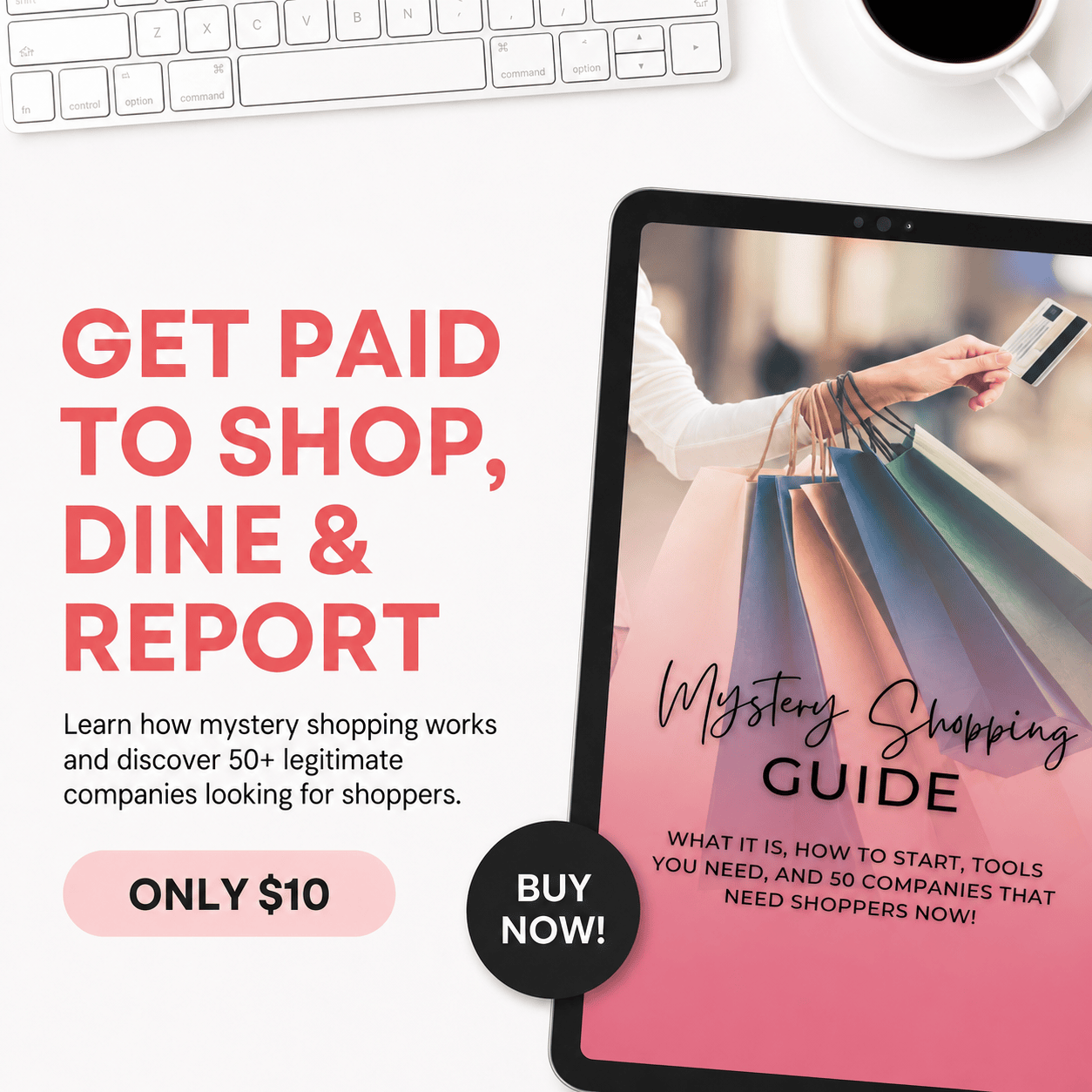
If mystery shopping is a side gig you want to try, my $10 Mystery Shopping Guide includes 50+ legitimate companies plus practical tips for getting started and avoiding scams.
What Does Mystery Shopping Involve?
Mystery shoppers visit a business, call a company, or complete an online interaction while posing as an ordinary customer. They follow detailed instructions, observe specific things, and submit a report without revealing that they are evaluating the business.
You may have to make a purchase, take photographs, remember employee names, record exact times, or write a detailed account afterward. I have a longer explanation of how mystery shopping works here.
If you would rather work without visiting local businesses, see my list of telephone mystery shopping companies.
How Much Do Mystery Shoppers Make?
BestMark says basic jobs commonly pay around $10 to $20, while some offer only a small reimbursement.
Coyle Hospitality says plentiful retail and fast-food shops often pay fees of $5 to $15 plus reimbursement.
Secret Shopper says its client payments range from $15 for basic assignments into the hundreds for more extensive shops. However, it also says the payment for some restaurant assignments may simply cover the cost of a meal for two.
Coyle says assignments paying $100 or more are more likely to involve financial services, apartment rentals, timeshares, hospitality, or another specialty. These opportunities can take much longer and may not allow you to evaluate the same location again.
Fees, Reimbursements, and Net Earnings
Assignment fee: This is the cash you earn for completing the visit and an accepted report.
Purchase reimbursement: This pays you back for an approved required purchase, up to the stated limit. It is not the same as profit because you had to spend the money first.
Gross earnings: This generally means money earned before subtracting business costs or taxes. Do not assume every payment total in a shopper account is pure earnings because it may include reimbursement.
Unreimbursed expenses: Gas, parking, tolls, tips, and any amount spent above the reimbursement limit can reduce what you actually keep. Note that some assignments also require you to carry the purchase cost for several weeks before payment arrives.
Net earnings: For deciding whether a shop is worthwhile, start with the assignment fee and any bonus, then subtract expenses that will not be reimbursed. Keep the reimbursement separate so that a $25 payment containing a $15 meal reimbursement does not look like $25 in earnings.
For example, imagine a shop offering a $15 fee and up to $18 for a required meal. If the meal costs $18 and you spend $4 on gas, your cash earnings before taxes are about $11, although you also received the meal.
If the driving, visit, and report take one hour altogether, that works out to about $11 per hour before taxes. This is only an illustration, but it shows why the advertised payment does not tell the whole story.
Realistic Monthly Mystery Shopping Scenarios
A beginner doing occasional shops: Completing one to three basic $5 to $20 shops per week would produce $20 to $240 in assignment fees over four weeks. That is before gas, other costs, and taxes, and it assumes enough suitable shops are available.
A more active shopper with an efficient route: Completing ten shops paying $15 each per week would produce $600 in fees over four weeks. However, that means completing 40 visits and reports, covering travel costs, meeting every deadline, and finding enough assignments close together.
An experienced shopper taking specialized work: A $100 assignment sounds much better, but suppose it takes three hours and costs $20 in travel. The shopper would keep about $80 before taxes, or roughly $26.67 per hour, provided the report is approved.
These examples are not income promises. But, they do show why monthly earnings depend more on available assignments, distance, report time, and approval than on one impressive advertised fee.
How Long Does Mystery Shopping Take to Pay?
It is common to wait until the following month for pay. Secret Shopper says it pays for the previous month’s approved shops on a staggered schedule, while Market Force says approved shops are paid by the twentieth business day of the next month.
This delay matters a bit when an assignment requires a purchase. Only accept a reimbursement shop if you can comfortably leave that money tied up until the stated payment date.
What Can Raise or Lower Your Earnings?
Your location: Shoppers near many stores and restaurants may have more choices and shorter drives. Rural shoppers may see bonuses for hard-to-fill locations, but a long trip can still erase the extra pay.
Report time and accuracy: Read the questionnaire before accepting because a short visit can have a long report. Companies can reject a late, incomplete, or inaccurate report, which may mean losing both the fee and reimbursement.
Your experience: Reliable shoppers who submit strong reports may qualify for more involved assignments. That said, MSPA Americas describes its advanced Gold certification as optional, so I would not treat paid certification as required to start.
Your ability to group shops: Several assignments along one route can reduce driving time and gas costs. Market Force also lets shoppers request a different fee on eligible “Make an Offer” assignments, although the company does not have to accept it.
What About Taxes?
Most mystery shoppers work as independent contractors. The IRS says gig income must generally be reported, while some business expenses may be deductible depending on the rules.
Keep records of fees, reimbursements, purchases, mileage, and other expenses. Because tax treatment depends on your situation and how payments are reported, ask a qualified tax professional rather than assuming every reimbursement is handled the same way.
A Quick Mystery Shopping Scam Warning
Legitimate mystery shopping companies do not mail large checks before an assignment and tell you to buy gift cards, deposit money, or wire part of it elsewhere. That is a scam!
You should not have to pay a company just to register for assignments. Read my mystery shopping scam warning and use my list of legitimate mystery shopping companies when you are ready to sign up.
Is Mystery Shopping Worth It?
Mystery shopping can be worthwhile when the assignment is nearby, the fee is reasonable, and the purchase is something you would value anyway. Honestly, it is much less appealing when a low fee comes with a long drive, expensive required purchase, or complicated report.
For most people, it makes sense to begin with a few small assignments and track the total time and money involved. That will show you what you are really earning and which types of shops are worth accepting again.
If mystery shopping is not the right fit, I also have a larger list of flexible side gigs you can do on your own time.
Want to Learn More About Mystery Shopping?
Turn Everyday Shopping and Dining Into Extra Money.
Ever wondered what it would be like to get paid to visit stores, order food, make calls, and share your honest opinion? This guide shows you how mystery shopping works and where to find real opportunities.
Inside, you’ll find 50+ legitimate mystery shopping companies you can sign up with, plus helpful tips on getting started, completing assignments, knowing what to expect, and avoiding scams.
If mystery shopping sounds fun but you have no idea where to begin, this guide takes away the guesswork. Use it to start looking for flexible shopping gigs that fit around your schedule and may include free meals or reimbursed purchases.
BUY NOW — JUST $10

Anna Thurman is a work at home blogger and mom of two. She has been researching and reviewing remote jobs for over 15 years. Her findings are published weekly here at Real Ways to Earn.